Share
Save
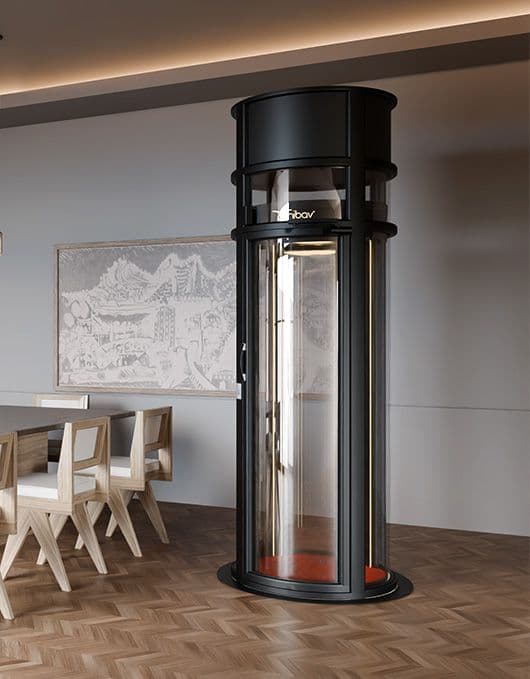
You've been thinking about a home elevator for your existing house. And then — almost immediately — the doubt arrives: "We don't have the space for something like that." You picture a large shaft cutting through the centre of the home, construction workers for weeks, floors torn open, and a machine room eating into what used to be a utility area.
That picture belongs to a different era. And it's costing Indian homeowners something real — years of unnecessary stair-related struggle for elderly family members, avoidable daily inconvenience, and the slow creep of restricted movement in a home they've spent years building exactly right.
The reality of home elevators in existing houses in 2026 is dramatically different. Modern vacuum (air-driven) home elevators are self-supporting, require no pit or machine room, and fit into spaces that most homeowners genuinely already have — without structural changes, without construction chaos, and without the timeline that used to make the whole idea feel impossible.
The assumption that an existing house can't accommodate a home elevator comes from a reasonable place — it's just based on outdated information.
Traditional home elevators — hydraulic and traction systems — were designed for commercial buildings and adapted to residential use. Their infrastructure requirements reflect that commercial origin: a pit of 200–400 mm excavated below the ground floor, a machine room of 4–8 square metres adjacent to the shaft, and structural shaft walls that need to be built into the home's structure.
For a home already built and occupied, these requirements meant significant construction. In Mumbai, where plots are compact and civil work is expensive, that could mean ₹5–10 lakhs in additions before the lift itself was even considered. In Chennai's older villas with heritage structures, excavating a pit adjacent to existing foundations was simply off the table.
These aren't unreasonable barriers. They're real. But they apply to the wrong technology — and vacuum home elevators eliminate all of them at the engineering level, not as a compromise.
This is the question that changes everything for most homeowners. The actual space requirements for modern vacuum home elevators are:
Standard compact models:
Accessible Max models (wheelchair-compatible):
To put 1010 mm in context: it is smaller than a standard Indian bathroom (typically 1500 × 1800 mm or larger). It is smaller than the landing area at the top of most residential staircases. It is smaller than the corner space beside most Indian living room furniture arrangements.
The complete footprint of a standard home elevator in an existing house is less than 0.8 square metres — and it is circular, which fits naturally into corners and structural voids that rectangular installations never could.
The self-supporting nature of vacuum home elevators opens placement flexibility that traditional lifts cannot offer. Here are the most common — and practical — placement options for existing Indian homes:
Under the Open Staircase
In most Indian villas and duplexes, the void beneath the staircase is either left open or used loosely for storage. The footprint of a standard vacuum elevator fits precisely within this void in the majority of cases. The shaft rises through the staircase floor void to the upper level — clean, efficient, and architecturally neat. The staircase remains fully functional and completely unaffected.
Corner of the Living or Dining Area
A 1010 mm circular footprint in a corner of the living room, study, or dining area occupies less visual and physical space than most furniture pieces. The transparent polycarbonate shaft allows light to pass through and maintains the open feel of the space — the lift becomes part of the interior rather than an intrusion into it.
Car Porch or Ground-Level External Area
Placement at ground level in the car porch, with the shaft rising through the floor slab into the first floor, is a popular choice in South Indian villas and Chennai bungalows. This configuration keeps the lift entirely outside the main living area, adding accessibility without consuming any interior space.
Adjacent to an Exterior Wall
For homes where interior space is genuinely tight, the shaft can be positioned against an exterior wall with openings through the wall at each floor level rather than through the floor slab. This keeps the shaft's circular footprint outside the main living volume with access points at each floor through the wall.
The installation process for a vacuum home elevator in an existing Indian house is designed to be minimally disruptive. Here is the honest, step-by-step picture:
Site assessment (Day 0): A Nibav technical specialist visits the home, confirms placement, checks floor-to-floor height, ceiling clearance, and structural suitability. Complimentary, no obligation.
Floor openings (Day 1): Clean circular openings are core-cut at each intermediate floor level. This is controlled, precise work — 4–6 hours per floor. Dust is localised and manageable.
Shaft assembly (Day 1–2): The self-supporting polycarbonate and aluminium shaft is assembled from the ground floor upward in modular sections. No crane, no heavy machinery.
Cabin, motor, and electrical connection (Day 2): The cabin unit is installed within the shaft, the turbine motor head is fitted at the top, and single-phase electrical connection is made.
Testing and handover (Day 2): Comprehensive safety testing and full operational walkthrough before sign-off.
Total: 24–48 working hours. The home remains fully liveable throughout every stage. No structural walls are removed. No foundations are touched. No overnight construction.
Understanding who genuinely benefits from a home elevator in an existing house helps frame the decision:
Families with elderly parents are the most common primary drivers. A parent who has been quietly avoiding the upper floor, or gripping the railing with increasing anxiety, can regain full access to their home within 24 to 48 working hours of the installation starting.
Post-surgery and recovery households where a family member faces temporary or permanent mobility changes that make stairs dangerous or painful.
NRI families with parents in India who want to install safe, low-maintenance home infrastructure during a visit — or arrange it remotely. The 24–48 working hour installation makes this practically achievable even during short stays.
Homeowners planning ahead — typically in their 40s and 50s — who recognise that the stairs that feel comfortable today will not always feel that way, and who want to make the right decision before it becomes urgent.
Villa and duplex owners in Chennai, Bangalore, Mumbai, and Hyderabad who want to enhance property value and lifestyle quality with a premium home feature that adds to the home rather than disturbing it.
"My space is 3 feet — is that enough?" The Series III Standard requires 1010 mm (3.3 feet). If your available space is exactly 3 feet (approximately 915 mm), a site assessment is essential — a specialist can confirm whether the actual space accommodates the shaft with correct clearance, or advise on alternative placement. Often, a slightly different position within the same room provides the additional 95 mm needed.
"My house is 15 years old — is the structure suitable?" Most standard RCC residential construction in India supports vacuum elevator installation without structural modification. The site assessment specifically evaluates structural suitability for your home's specific construction.
"Will I need to inform my building society?" For standalone villas and independent houses, typically no. For homes within gated communities or registered societies in cities like Bangalore and Mumbai, prior notification may be required. Your installation team will advise.
Nibav's entire product range was designed with the retrofit challenge in mind — because the majority of Indian homeowners who want a lift already live in their homes. Every model is pitless, machine-room-free, and self-supporting. Every model installs in 24–48 working hours. Every model carries TÜV NORD Certification, independently verified against European safety standards.
The Series III Standard — at 1010 mm clear floor space and ₹11,49,000* starting price for G+1 — is the most compact, most accessible entry point in the range. The Series V Max — at ₹22,49,000* — brings auto-opening doors, a 25-year motor and seal warranty, laser-engraved personalisation, and smart emergency communication to the flagship end of the range.
All models. All existing houses. All achievable in 24–48 hours.
Most can — particularly G+1 to G+3 villas, duplexes, and independent houses with standard RCC construction. A site assessment confirms specific suitability. The key requirement is 1010 mm clear floor space (standard models) and standard ceiling height.
No. Vacuum elevator installation involves only clean circular floor openings at each level — no structural wall removal, no foundation work, no impact on the building's load-bearing elements.
1010 mm clear floor diameter for standard models, 1430 mm for wheelchair-accessible Max models. No pit or machine room space required — these are the complete footprints.
24–48 working hours for most G+1 to G+3 residential installations. The home remains fully liveable throughout with no extended construction disruption.
Nibav's Series III Standard starts at ₹11,49,000* for a G+1 installation, all-inclusive with no civil work additions. Prices exclude taxes and vary based on model, floors, and customization.